Strong software for work. Just as strong for play.
I came to it the long way around: five years ago I left customer-facing financial services for engineering, so I spent one career listening to people describe problems and the next one fixing them.
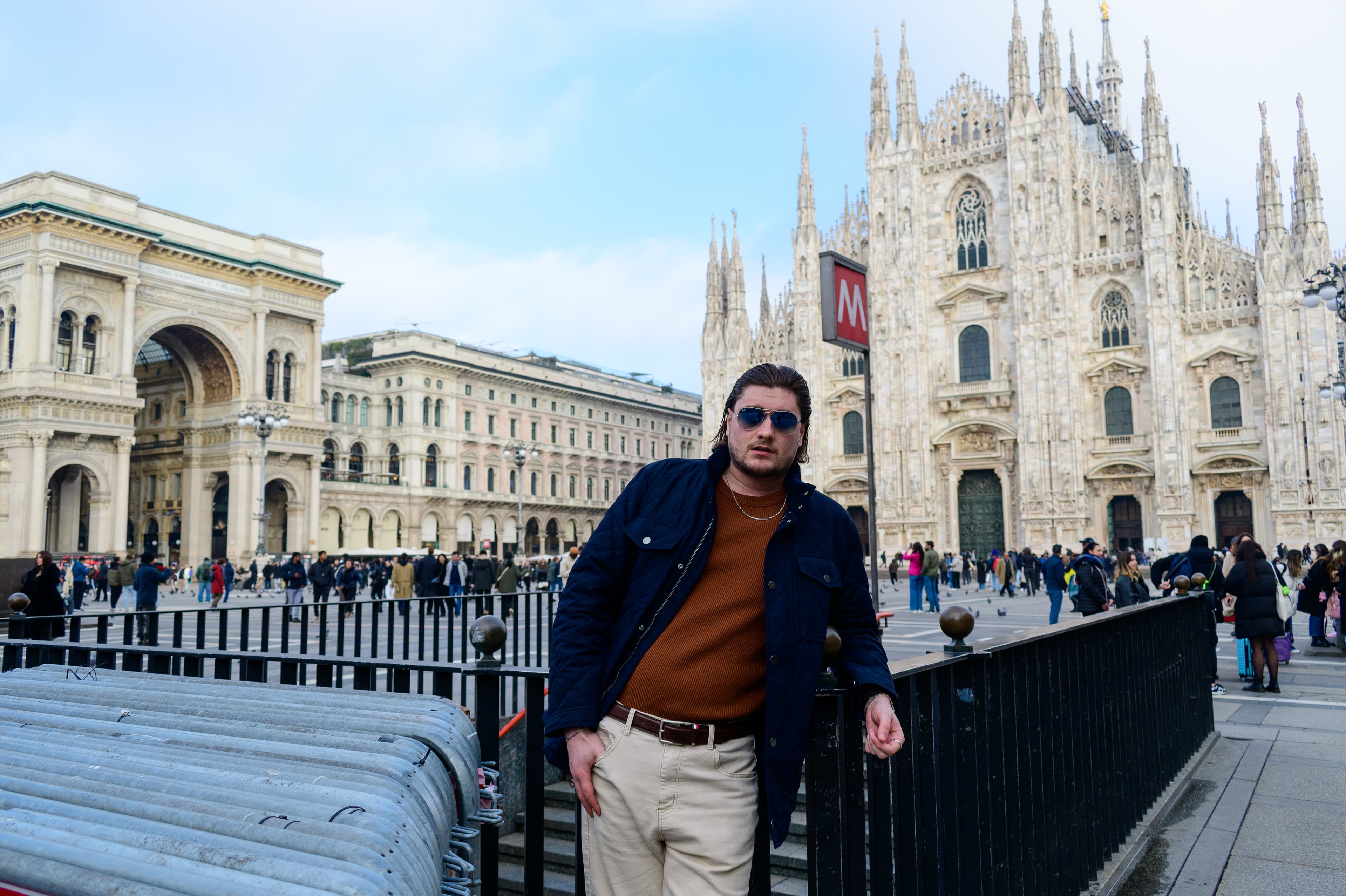
I inherited my employer’s wealth management platform as a codebase nobody wanted to touch, and left it as the product the company leads with — redesigned, grown, and years of technical debt lighter. I moved a homegrown enterprise authentication system onto OAuth 2.1 and shipped the unglamorous core that SaaS actually runs on: dashboards, document browsers, questionnaires — the screens people sit in all day.
I also build my own products. A travel blog I made for one Mediterranean trip became Farovia, a travel SaaS I have been building since 2024 and ship in summer 2026 — Next.js, Express, MongoDB, AWS, Docker, every layer mine. Alongside it: a published npm package, a fantasy football scout that ranks players by return per unit of cost, an offline Italian trainer for the commute. Some are still in progress. Each one started as an empty folder and my own evenings — the part of building a product that no employer teaches you.
Expertise
Front-ends that get out of the way — Angular, React, Next.js, Tailwind CSS and TypeScript, built around what the user actually came to do.
Back-ends that stay up — Node.js, Java and Python, with secure authentication, low latency, and the boring kind of reliability nobody ever notices.
Answers pulled out of your data — SQL and NoSQL (MySQL, MongoDB), modelled so tomorrow’s question is easy to ask.
AI that ships, not AI that demos — LLM chat, agents, RAG pipelines and vector search, running in production.
Strong applications are mostly a series of unglamorous decisions. I write the boring version first, because clever is what somebody has to decode at 3am. I put authentication, error handling and access control in early, while they are still cheap. I build for more than one language from the first screen — this site runs in three. And I judge every shortcut by what it costs in year two, not by how much time it saves this week. The result is software that gets added to instead of rewritten, which is the only honest measure of whether it was built well.
I was born and raised near Montreal, in French-speaking Quebec, playing hockey and speaking English from a young age. That second language opened doors into engineering worlds I would never have seen otherwise — leisure and aviation — and fed a lasting appetite for geography and history.
Recent travels made me fall in love with Europe, and I am now B1 in Italian. What I want out of the work has not changed: stay curious, build things useful and beautiful enough that people and businesses grow around them, and keep a quality of life that is modest but second to none. If you are building something that has to work for real people, in more than one language, for longer than a quarter — my GitHub and LinkedIn are one click away, and I answer.